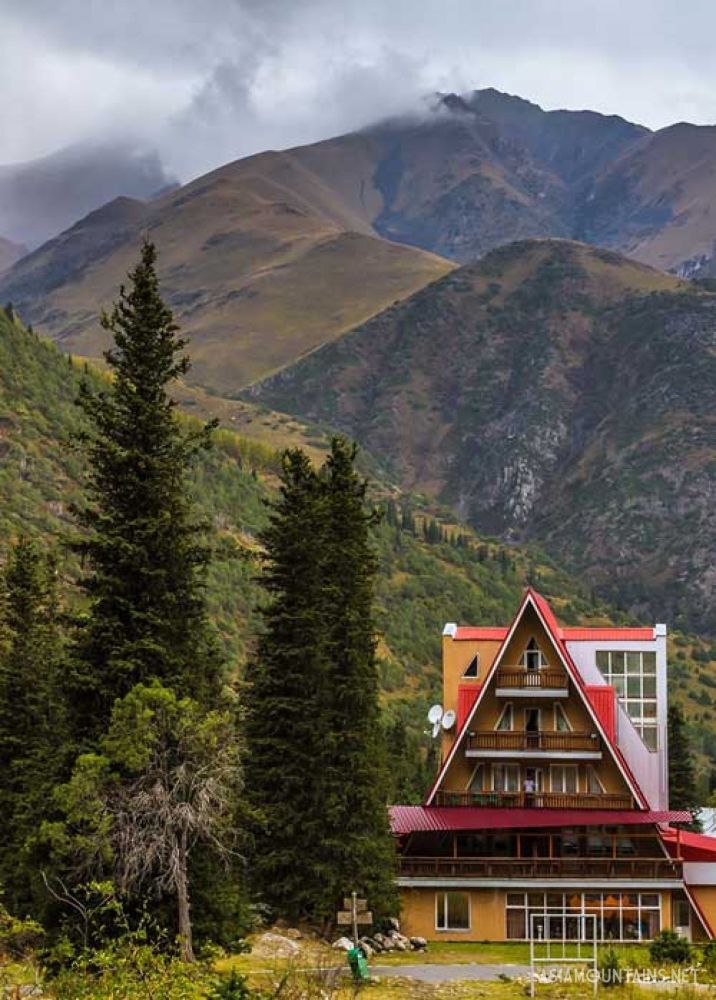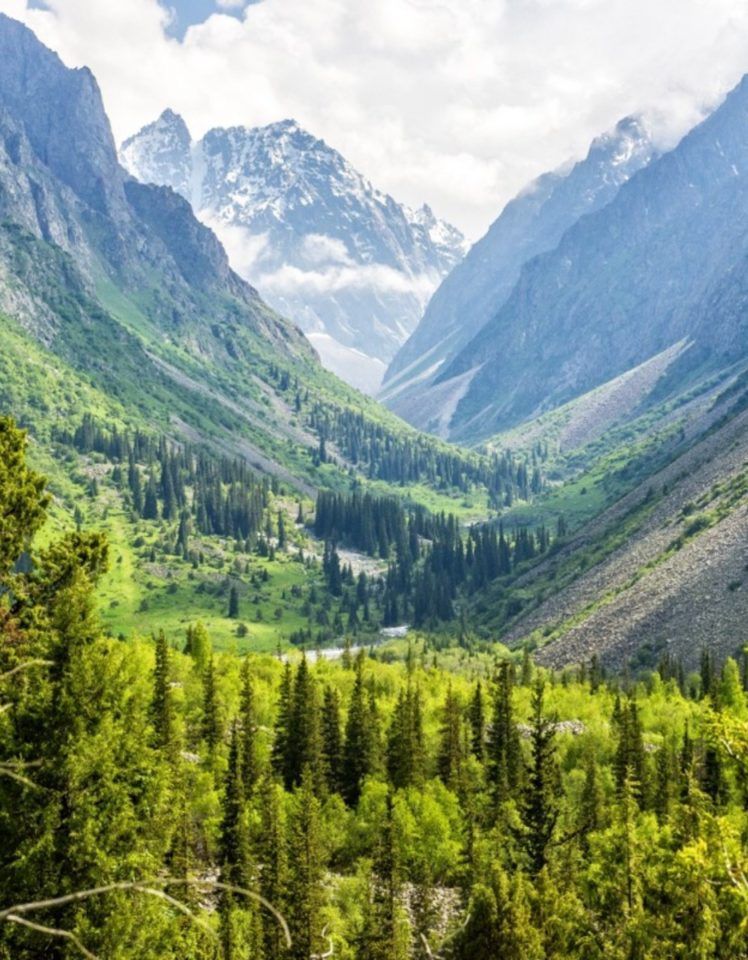
Ala Archa is where many travelers begin their journey into the mountains of Kyrgyzstan. Just one hour from Bishkek, visitors find themselves surrounded by towering Tian Shan peaks, dense spruce forests, rushing rivers, and snow-covered summits rising nearly 5,000 meters above sea level.
The park’s greatest advantage is its accessibility. While many famous mountain regions of Kyrgyzstan require long journeys, Ala Archa allows visitors to experience glaciers, waterfalls, and dramatic alpine landscapes within a single day.
Travelers can enjoy an easy walk along the Ala Archa River, hike to Ak-Sai Waterfall, or undertake a challenging mountain trek to Ratsek Hut and the surrounding glaciers. As a result, the park is equally popular among families, casual tourists, hikers, and professional mountaineers.
History and Origin
Ala Archa National Park was established in 1976 to protect the natural landscapes of the Kyrgyz Range and promote ecological tourism.
Long before the creation of the national park, these lands served as summer pastures for Kyrgyz nomads.
The gorge gained widespread recognition during the Soviet era with the rapid development of mountaineering. Due to its proximity to Frunze (modern-day Bishkek), the area became an important training ground for climbers and athletes.
Over time, Ala Archa developed into one of the most famous mountaineering regions in the entire Soviet Union.
Athletes from Moscow, Leningrad, Kyiv, Almaty, and many other Soviet cities came here to train. For countless climbers, Ala Archa became the site of their first serious mountain ascents.
The name Ala Archa is commonly translated as “Colorful Juniper.” Archa, the mountain juniper, is considered a sacred plant in Kyrgyz culture and is traditionally used in purification rituals.
Flora and Fauna
Ala Archa is one of the most biologically diverse natural areas of the Northern Tian Shan and serves as an important refuge for Kyrgyzstan’s wildlife.
The most recognizable symbol of the gorge is the famous Tian Shan spruce. Some trees exceed 20 meters in height. Local residents often say that their root systems extend nearly as deep underground as the trees grow above the surface. This allows them to withstand heavy snowfall, avalanches, and powerful mountain winds.
Attempts to cultivate Tian Shan spruce outside its native habitat have been made repeatedly, but the species rarely adapts successfully beyond the Tian Shan Mountains.
Another important plant in Kyrgyz culture is archa (mountain juniper), from which the park takes its name. For centuries, nomads used juniper branches for cleansing rituals and protection from evil spirits. Even today, many Kyrgyz families continue the tradition of burning juniper during holidays and important celebrations.
Ala Archa is considered one of the best places in Kyrgyzstan for wildlife observation.
During hikes, visitors often encounter wild sheep, wild boars, marmots, and other mountain animals. Golden eagles and various birds of prey can frequently be seen soaring above the gorge on thermal air currents.
Smaller inhabitants include mountain hamsters, pikas, and numerous bird species. During warmer months, snakes may occasionally be encountered on rocky slopes, making it advisable to stay on marked trails.
Remote areas of the national park are home to lynx and the elusive snow leopard. Sightings are extremely rare, but the presence of these endangered species highlights the ecological importance of Ala Archa.
Where Is Ala Archa Located?
Ala Archa National Park is located in the Chuy Region on the northern slopes of the Kyrgyz Ala-Too Range, approximately 40 kilometers south of Bishkek.
The drive to the park entrance typically takes between 40 and 60 minutes, depending on traffic conditions.
Because of its proximity to the capital, Ala Archa is the most visited natural attraction in Kyrgyzstan and one of the few places where visitors can experience authentic Tian Shan mountain landscapes in a single day.
Entrance Fees and Opening Hours
The entrance fee to Ala Archa National Park is:
- Adults — 250 KGS
- Children aged 7–14 — 180 KGS
- Children under 7 — free of charge
Visitors arriving in private electric vehicles pay approximately 880 KGS per vehicle.
In recent years, the park administration has actively promoted environmentally friendly transportation. Electric buses and electric vehicles operate between the entrance checkpoint and Ala Archa Alpine Camp, reducing environmental impact while improving accessibility.
Most of the park’s popular hiking routes begin from the alpine camp.
Visitors can also purchase tickets for the new cable car system, with round-trip tickets costing approximately 600 KGS.
The cable car ascends to Tepshi Plateau, one of the finest viewpoints in Ala Archa. From the summit, visitors enjoy panoramic views of the gorge, spruce forests, mountain rivers, and the snow-covered peaks of the Kyrgyz Ala-Too Range.
Best Hiking Trails in Ala Archa
Ala Archa offers everything from short nature walks to demanding alpine treks.
Walking Along the Gorge
This is the easiest way to experience the park.
A wide trail begins at the alpine camp and follows the Ala Archa River through spruce forests while providing excellent views of surrounding mountain peaks.
The route is suitable for families with children, elderly visitors, and travelers experiencing the mountains of Kyrgyzstan for the first time.
Ak-Sai Waterfall
One of the most popular hiking routes in the park.
The waterfall stands approximately 35 meters high.
The hike takes around 1.5–2 hours each way. The trail gradually gains elevation before reaching a steeper final section. Most visitors can complete the route without specialized hiking experience.
The waterfall is particularly impressive during spring and early summer when snowmelt significantly increases water flow.
Ratsek Hut
Ratsek Hut is one of the most famous mountain destinations in Kyrgyzstan.
Located at approximately 3,300 meters above sea level, it has served as a base for climbers for several decades.
The route begins at the alpine camp and typically requires 4–6 hours of hiking.
Along the way, visitors cross mountain rivers, rocky terrain, and enjoy spectacular glacier views. For many travelers, the ascent to Ratsek Hut becomes their first serious high-altitude trekking experience.
Ak-Sai Glacier
Experienced hikers can continue beyond Ratsek Hut to Ak-Sai Glacier.
Many mountaineering expeditions begin here before ascending the region’s famous peaks.
The route traverses rocky alpine terrain and requires strong physical fitness. Hiring a mountain guide is highly recommended.
Ala Archa Alpine Camp
Ala Archa Alpine Camp is a legendary destination for climbers from Kyrgyzstan and across the former Soviet Union.
For decades, athletes from Moscow, Leningrad, Kyiv, Almaty, and many other cities trained here and prepared for major expeditions.
Today, the camp remains the starting point for numerous hiking and climbing routes while preserving the rich history of Soviet mountaineering.
Ala Archa Cable Car
One of the newest attractions in the park is the Ala Archa Cable Car, which transports visitors to Tepshi Plateau.
The ride takes only a few minutes, but the views from the upper station are extraordinary.
Visitors can enjoy sweeping panoramas of Ala Archa Gorge, conifer forests, alpine valleys, and snow-covered peaks of the Kyrgyz Ala-Too Mountains.
It is an excellent option for travelers who want to experience mountain scenery from above without undertaking a long hike.
Things to Do in Ala Archa
Most visitors come to Ala Archa for hiking and outdoor recreation, but the park offers much more.
Travelers can ride the cable car to Tepshi Plateau, enjoy a picnic by the river, visit Ak-Sai Waterfall, or undertake a challenging trek to Ratsek Hut.
Photographers are drawn by panoramic mountain landscapes, while wildlife enthusiasts often spend hours observing marmots, mountain goats, and birds of prey.
For a deeper understanding of the park, hiring a local guide is recommended. Guides can suggest routes suitable for different fitness levels and reveal viewpoints that many visitors miss.
Best Time to Visit
Spring
Mountain meadows begin to bloom, rivers reach peak flow, and lower hiking routes become especially scenic.
Summer
The best season for Ak-Sai Waterfall, Ratsek Hut, glacier hikes, and high-altitude trekking. Nearly all trails are accessible.
Autumn
Fewer visitors, comfortable temperatures, and beautiful golden mountain landscapes make autumn one of the most photogenic seasons.
Winter
Ideal for lower-elevation walks and cable car rides. High-altitude routes require winter equipment and mountaineering experience.
Useful Tips
- Bring warm clothing even during summer.
- Trekking boots and hiking poles are recommended for Ratsek Hut.
- Carry sufficient drinking water, especially during warm months.
- A guide is strongly recommended for routes beyond Ak-Sai Waterfall.
- Visit the cable car early in the day to avoid crowds.
- Do not feed wildlife or leave marked trails.
- Start long hikes as early as possible.
Frequently Asked Questions
How much time do I need to visit Ala Archa?
A simple visit to the gorge requires approximately 4–5 hours. Hiking to Ratsek Hut generally takes a full day.
Is Ala Archa suitable for children?
Yes. The lower part of the gorge and riverside trails are ideal for families.
Do I need a guide?
Not for easy walking routes. Guides are strongly recommended for glacier hikes and high-altitude trekking.
When is the best time to visit?
May through October is ideal for hiking, while the lower gorge can be visited year-round.
Tours
Ala Archa National Park is widely considered the best place to experience the mountains of Kyrgyzstan for the first time.
Within just one hour of Bishkek, visitors can see glaciers, waterfalls, alpine meadows, mountain rivers, and some of the most spectacular landscapes of the Tian Shan Mountains.
Ulush Travel organizes day tours, guided hikes to Ak-Sai Waterfall and Ratsek Hut, as well as customized trekking programs with professional mountain guides for travelers who want to explore Ala Archa in depth.